Onsetology Field Notes
AI-Assisted Physical Production: What Changes Before the Shoot
A practical guide to planning live-action plates, lighting, coverage, and approvals when AI will extend the finished image.
The AI decision belongs in pre-production
A hybrid film becomes fragile when the production treats AI as a rescue step after editorial. The useful question is not whether a project will use AI. It is which parts of the image should remain physical, which parts should be constructed or transformed, and what information the post team will need from the set.
That decision changes the shot list. It can affect framing, clean plates, lens metadata, lighting references, wardrobe texture, reflective surfaces, camera movement, and the amount of coverage needed for editorial. The earlier those choices are made, the more freedom the final image has.
Protect the elements that are hardest to regenerate
Performance, timing, eye lines, object interaction, and deliberate camera movement are often the strongest reasons to shoot physically. They give the scene a human center and create constraints that help every later visual decision feel connected.
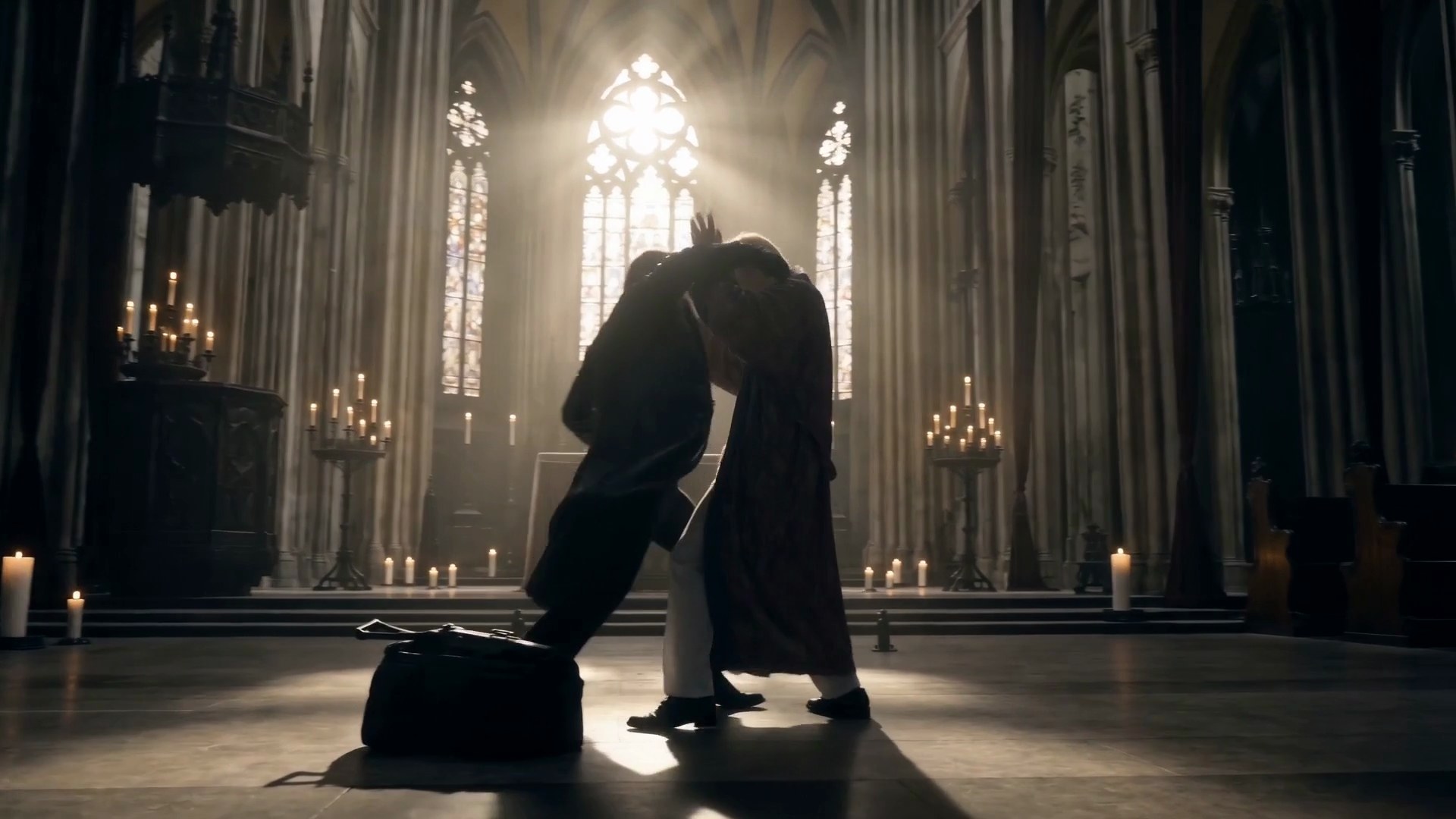
In the cathedral study, the photographed action remains the anchor while the environment expands around it. In The Last Frontier, the practical figure supplies shape and texture while the Mars-like setting is built in post. The production method is different in detail, but the principle is the same: identify what must stay stable before transforming what surrounds it.
Design an approval path for motion, not only still frames
A single frame can hide continuity problems that become obvious as soon as the shot moves. Useful look development includes short motion tests with real source material. Those tests reveal how the method handles edges, occlusion, motion blur, changing perspective, and lighting across time.
Approvals should move from visual target to representative motion test, then to a small sequence before a full batch of shots. This keeps creative review focused and prevents a promising frame from being mistaken for a production-ready workflow.
Plan the fallback at the same time as the hero method
Every high-ambition workflow needs a clear fallback. That may mean a simpler set extension, a practical alternative, a conventional composite, or an edit that avoids the highest-risk transition. A fallback is not a lack of confidence; it is part of responsible production control.
When the team knows which visual decisions are essential and which can change, it can protect the schedule without flattening the idea. That is the real advantage of integrating physical production and AI planning from the start.
