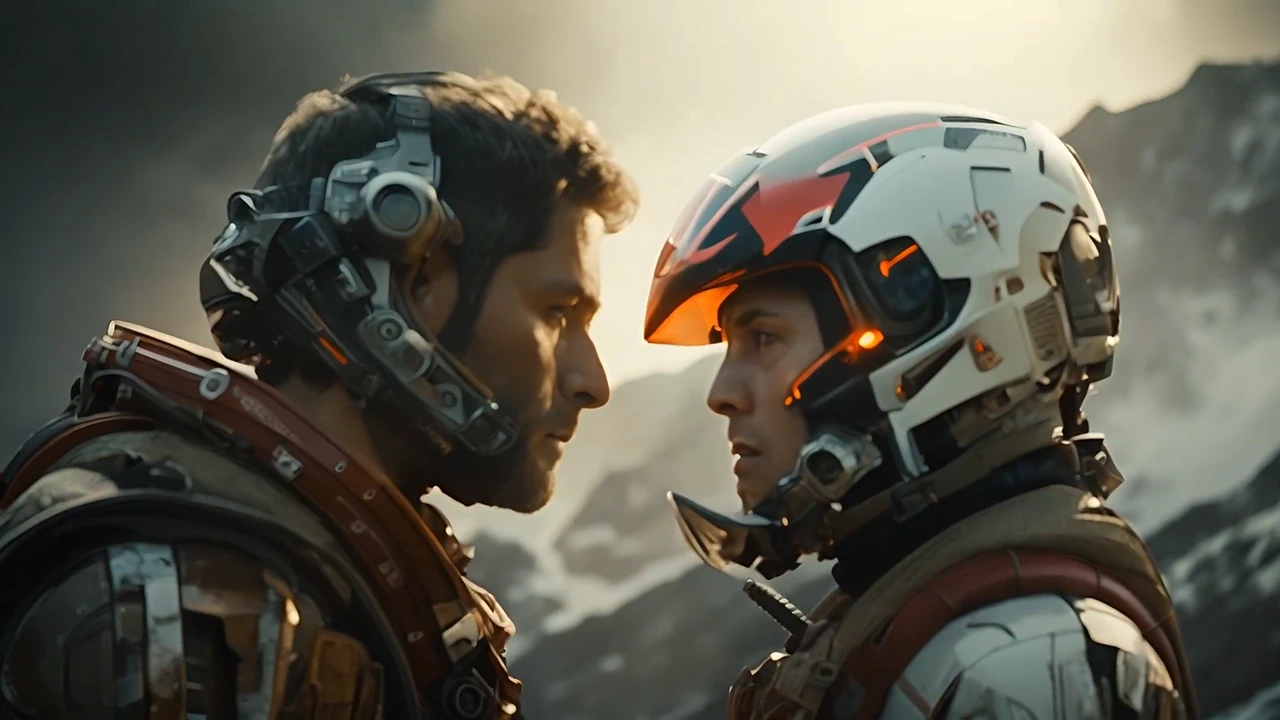
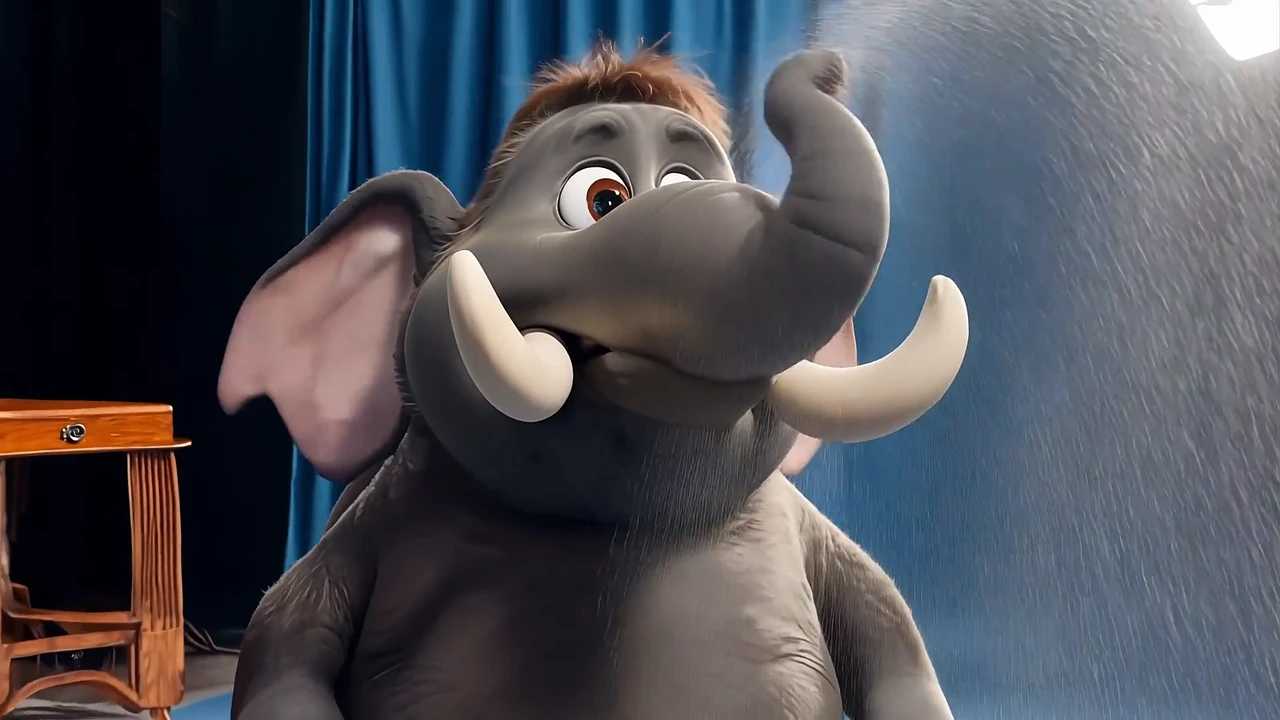
Define a world before producing individual shots
A fully generated film needs more than a collection of attractive images. The team first defines the visual rules that should remain stable: character features, wardrobe, environment materials, scale, light, lens language, movement, and the level of stylization the project can support.
Those rules become working references for shot creation and review. They do not remove exploration; they make it possible to judge whether a new variation belongs to the same film instead of evaluating every output in isolation.
Continuity is an editorial and finishing problem
A generated shot can be compelling by itself and still fail next to the shots around it. Identity, screen direction, eyelines, motion, lighting, environment geography, and the duration of an action all need to survive the cut.
For that reason, development happens in the edit. Representative shots are assembled early, weak transitions become visible, and selected material receives compositing, cleanup, sound, color, and version control before it is treated as final.
Build review and rights questions into development
The production plan should identify who can approve characters, products, references, likeness, music, copy, and final usage. Tool selection and source material must be reviewed against the requirements of the project rather than assumed to be interchangeable.
Onsetology evaluates those questions during development and does not treat generated material as automatically cleared for every use. A finished delivery still requires an agreed approval record, the correct platform versions, and source files organized for future review.